Bulldozers are powerful and versatile machines that play a crucial role in the construction, mining, and agricultural industries. Known for their strength and durability, bulldozers are used to move large quantities of soil, sand, rubble, or other material, making them essential for various earth-moving tasks. In this article, we’ll explore what bulldozers are, the different types available, and some key tips for selecting the right bulldozer for your specific needs.
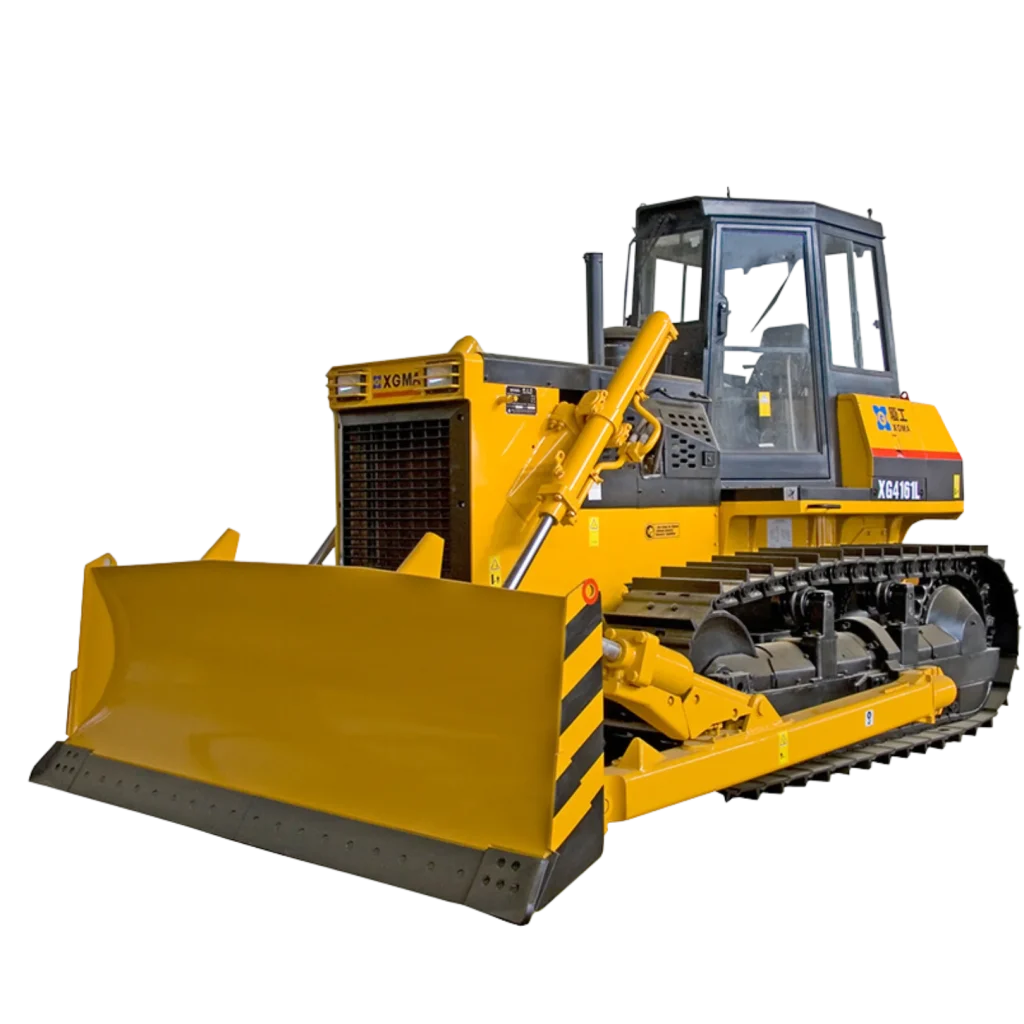
A bulldozer is a large, heavy-duty tractor equipped with a substantial front-mounted blade that can push, dig, and level materials like dirt, sand, and debris. Bulldozers are known for their exceptional power, which allows them to handle tough terrains and heavy materials. They are commonly used in construction, road building, demolition, land clearing, and other heavy-duty tasks.
Types of Bulldozers
Bulldozers come in various types and sizes, each designed for specific applications. Understanding the different types can help you choose the right machine for your project.
- Crawler Bulldozers
Crawler bulldozers, also known as track bulldozers, are the most common type. They have tracks instead of wheels, providing excellent traction on rough and uneven terrain. Crawler bulldozers are ideal for heavy-duty tasks like clearing land, pushing heavy materials, and working on steep or uneven surfaces. They are typically used in construction sites, mining operations, and forestry work.
- Wheel Bulldozers
Wheel bulldozers, as the name suggests, are mounted on wheels rather than tracks. This type of bulldozer offers greater mobility and speed, making it suitable for tasks that require quick movement across flat and firm surfaces. Wheel bulldozers are often used in road construction, landscaping, and other projects where speed and manoeuvrability are essential.
- Mini Bulldozers
Mini bulldozers, or compact bulldozers, are smaller versions of crawler and wheel bulldozers. These machines are designed for tasks in confined or small areas, such as residential construction sites or landscaping projects. Despite their smaller size, mini bulldozers offer impressive power and versatility for light to medium-duty tasks.
- Swamp Bulldozers
Swamp bulldozers are specialized machines designed for working in wet or swampy conditions. They feature extra-wide tracks that distribute the machine’s weight more evenly, preventing it from sinking into soft ground. Swamp bulldozers are used in marshland, wetlands, and other waterlogged areas where standard bulldozers might struggle.
Tips for Choosing the Right Bulldozer
Selecting the right bulldozer for your project can significantly impact efficiency, cost, and overall success. Here are some tips to help you make the best choice.
1.Assess Your Project Needs
Start by evaluating the specific requirements of your project. Consider the type of terrain, the materials you’ll be working with, and the size of the area. For example, a crawler bulldozer might be ideal for heavy-duty tasks on rough terrain, while a wheel bulldozer could be more suitable for projects on flat, firm ground.
2.Consider the Size and Power
Bulldozers come in various sizes, ranging from small, compact models to large, heavy-duty machines. The size and power of the bulldozer should match the scale of your project. For large-scale earth-moving tasks, a larger bulldozer with higher horsepower will be more efficient. For smaller jobs or work in confined spaces, a mini bulldozer may be more appropriate.
3.Think About Manoeuvrability
Manoeuvrability is an important factor, especially if your project involves working in tight spaces or requires frequent movement. Wheel bulldozers offer better speed and mobility on flat terrain, while crawler bulldozers provide superior traction and stability on uneven ground.
4.Evaluate the Blade Type
Bulldozers come with different blade types, such as straight blades, universal blades, and angle blades. The blade type you choose should be based on the specific tasks you’ll be performing. For instance, a straight blade is good for fine grading and levelling, while a universal blade is better for pushing large quantities of material.
5.Consider the Operating Environment
The environment in which you’ll be operating the bulldozer plays a crucial role in determining the right machine. If you’re working in a swampy or wet area, a swamp bulldozer with wide tracks would be ideal. For projects in urban or residential areas, a smaller, quieter bulldozer might be more appropriate.
6.Budget and Maintenance Costs
Finally, consider your budget and the long-term maintenance costs associated with the bulldozer. While it might be tempting to choose the most powerful machine, it’s important to balance power with affordability. Factor in the costs of fuel, maintenance, and potential repairs when making your decision.
Bulldozers are indispensable machines for a wide range of industries, offering the power and versatility needed to tackle tough tasks. By understanding the different types of bulldozers and considering factors such as project needs, size, manoeuvrability, and budget, you can select the right bulldozer to ensure the success of your project. For all your heavy equipment needs, whether for mining or your business, PT. Komurinda Inti Mandiri is ready to provide the solution. For more information, contact us at : 0811-477-600.